
Call us now :08045479840
 Send Inquiry
 Send Inquiry
Insulated Power Cables
MOQ : 10 Meters
Insulated Power Cables Specification
- Automation Grade
- Manual Installation
- Frequency
- 50/60 Hz
- Application
- Power Distribution, Industrial, Residential, Commercial
- Equipment Type
- Electrical Power Cable
- Phase
- Single & Three Phase
- Output Voltage
- Up to 1100V
- Current Range
- Upto 630A
- Power Source
- Electrical
- Diameter
- Available from 1.5 sq mm to 400 sq mm
- Type
- Insulated Power Cable
- Condition
- New
- Material
- Copper Conductor, PVC Insulation
- Power
- Up to 1100V (as per application)
- Voltage
- Up to 1100V
- Dimensions
- Custom, as per requirement
- Input Voltage
- Up to 1100V
- Rated Current
- Dependent on cable size, max 630A
- Rated Capacity
- As per IS:1554 standards
- Sheath Type
- PVC/XLPE Outer Sheath
- Fire Resistance
- FR/FRLS/HFFR available
- Packaging
- Standard coil or drum packing
- Length
- 100 meters (standard) or as per order
- RoHS Compliant
- Yes
- Temperature Range
- -10°C to +70°C
- Core Type
- Single Core, Multi Core
- Insulation Material
- High grade PVC
- Dielectric Strength
- Up to 3.5 kV
- Color Options
- Red, Black, Yellow, Blue (as required)
- Conductor Material
- Pure annealed copper
Insulated Power Cables Trade Information
- Minimum Order Quantity
- 10 Meters
- Supply Ability
- 100 Meters Per Day
- Delivery Time
- 1 Week
About Insulated Power Cables
With several years of experience in the industry, we are supplying Insulated Power Cables. These are electrical cables, which are made by assembling one or more electrical conductors. This assembly is held together with an overall sheath and is further used for transmission of electric power. These cables consist of three major components, which include conductors, insulation and protective jack. Their construction and material depend upon working voltage, current carrying capacity and environmental conditions like temperature or sunlight exposure. Insulated Power Cables can be installed as permanent wiring within buildings, run overhead, machinery, portable devices and can be buried in the ground.
Reliable Performance for Versatile Applications
Constructed from pure annealed copper and insulated with high-grade PVC, our power cables are engineered to deliver consistent power transmission across a range of environments. With temperature tolerance up to 70C and a dielectric strength of 3.5 kV, they ensure safe and reliable operation for both low and medium voltage applications.
Customizable to Match Project Needs
We offer cables in multiple core types, color options, and sizesfrom 1.5 sq mm to 400 sq mm in diameterensuring a suitable solution for every project. Whether for residential wiring or industrial installations, our cables can be tailored in length and specifications to meet unique requirements.
Safety and Compliance Assured
Our cables meet stringent RoHS and IS:1554 standards, available with enhanced fire resistance (FR, FRLS, HFFR), making them ideal for installations where safety is paramount. The combination of reliable materials and manufacturing processes guarantees longevity and consistent electrical performance.
FAQs of Insulated Power Cables:
Q: How are insulated power cables with pure annealed copper conductors installed?
A: These cables are installed manually, following standard electrical installation procedures. The cables are supplied in coils or drums and can be cut to the required lengths for connection, suitable for both surface and concealed wiring in residential, commercial, or industrial settings.Q: What benefits does the high-grade PVC insulation offer?
A: High-grade PVC insulation provides excellent electrical insulation, reduces the risk of leakage currents, and enhances overall cable safety. It also improves durability by resisting abrasion, moisture, and chemicals, making these cables suitable for demanding environments.Q: When should I select FR, FRLS, or HFFR fire resistance options?
A: Choose FR (Flame Retardant), FRLS (Flame Retardant Low Smoke), or HFFR (Halogen Free Flame Retardant) based on your fire safety requirements. FRLS and HFFR are recommended for environments where minimizing smoke and toxic emissions during a fire is critical, such as in public buildings or enclosed spaces.Q: Where can these insulated power cables be used?
A: These cables are suitable for a wide range of applications including power distribution in residential complexes, commercial buildings, and industrial facilities. Their adaptability to different voltage, current, and environment types ensures reliable performance in diverse settings.Q: What is the standard process for ordering custom dimensions or lengths?
A: To order cables with specific dimensions or lengths, simply provide your requirementssuch as core size, color, sheath type, and lengthto the distributor or supplier. Custom orders are fulfilled as per your specifications, ensuring a perfect fit for your application.Q: How does RoHS compliance benefit the user?
A: RoHS compliance ensures the cables are free from hazardous substances, making them environmentally safer and suitable for use in sensitive installations, such as schools or hospitals. This also supports organizations in meeting regulatory standards for eco-friendly materials.Q: What is the usage advantage of multi-core versus single-core cables?
A: Single-core cables are typically used for straightforward wiring in smaller circuits, whereas multi-core cables house multiple conductors in one sheath, simplifying installation and organization in more complex power distribution systems, particularly where space or neatness is a concern.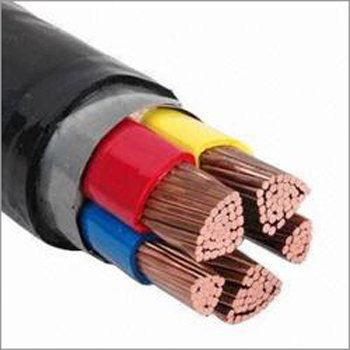
Tell us about your requirement

Price:
Quantity
Select Unit
- 50
- 100
- 200
- 250
- 500
- 1000+
Additional detail
Mobile number
Email

More Products in Welding Cables and Hose Pipes Category
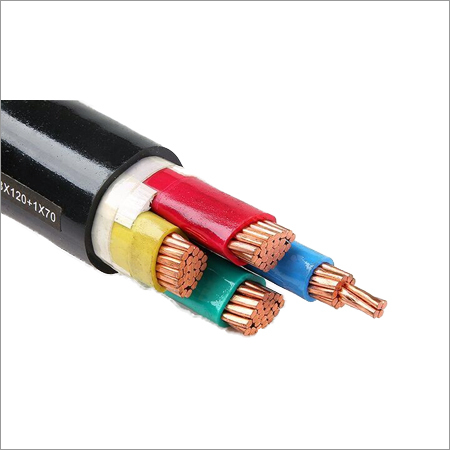
Insulated Welding Cables
Price 1 INR
Minimum Order Quantity : 10 Meters
Type : Insulated Welding Cables
Material : Copper Conductor, PVC Insulation
Application : Industrial Welding, Fabrication, Construction, Shipbuilding, Automobile Workshops
Automation Grade : Manual
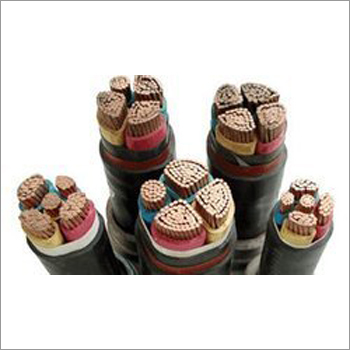
PVC Insulated Power Cables
Price 1 INR
Minimum Order Quantity : 10 Meters
Type : PVC Insulated Power Cables
Material : Copper/Aluminium Conductor, PVC Insulated
Application : Electrical Power Distribution, Industrial, Commercial, Residential Use
Automation Grade : Manual Installation
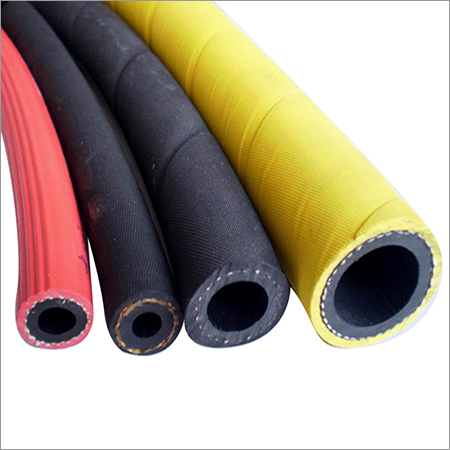
High-Grade Synthetic Rubber Welding Hoses
Price 1 INR / Piece
Minimum Order Quantity : 10 Meters
Type : Rubber Welding Hoses
Material : HighGrade Synthetic Rubber
Application : Welding and Cutting Operations in Industrial, Automotive, and Construction Sectors
Automation Grade : Manual
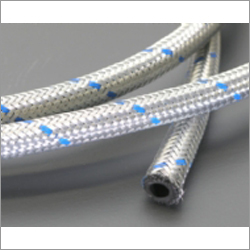
SS Flexible Hose Pipe
Price 1 INR / Meter
Minimum Order Quantity : 10 Meters
Type : Flexible Hose Pipe
Material : Stainless Steel (SS)
Application : Plumbing, Gas, Chemical Transfer, HVAC, Industrial Applications
Automation Grade : Manual

 Send Inquiry

Shop No.- 101/103, Nagdevi Street, Near 1st Md. Ali Road, Mumbai - 400003, Maharashtra, India

Mr. Sameer Desai
(Proprietor)
Mobile :08045479840
Mr. Paresh Desai
(Marketing)
Mobile :08045479840
 Send Inquiry
 Send SMS
 Call Me Free
Developed and Managed by Infocom Network Private Limited.
 English
 Spanish
 French
 German
 Italian
 Chinese (Simplified)
 Japanese
 Korean
 Arabic
 Portuguese